For the general population, many of us spend hours sitting, driving, or lifting objects overhead, but rarely do we focus on training our ankles. When was the last time you did calf raises or even thought about them? Tight hips may be a result of your ankle not being able to bend over your toes, which can lead to strain in the knees, hips, or lower back. The key to fixing the issues may be hidden in the lack of ankle of mobility.
What is Ankle Mobility?
Ankle mobility refers to the ability to move through the ankle joint with a full range of motion. When people experience pain in the lower back, knees, or hips, the ankle is often one of the most overlooked joints. We constantly load weight onto our ankles, but how often do you work on strengthening or testing the flexibility of your ankles? For the general population, many of us spend hours sitting, driving, or lifting objects overhead, but rarely do we focus on training our ankles. When was the last time you did calf raises or even thought about them? Tight hips may be a result of your ankle not being able to bend over your toes, which can lead to strain in the knees, hips, or lower back.
Impact on Athlete Performance:
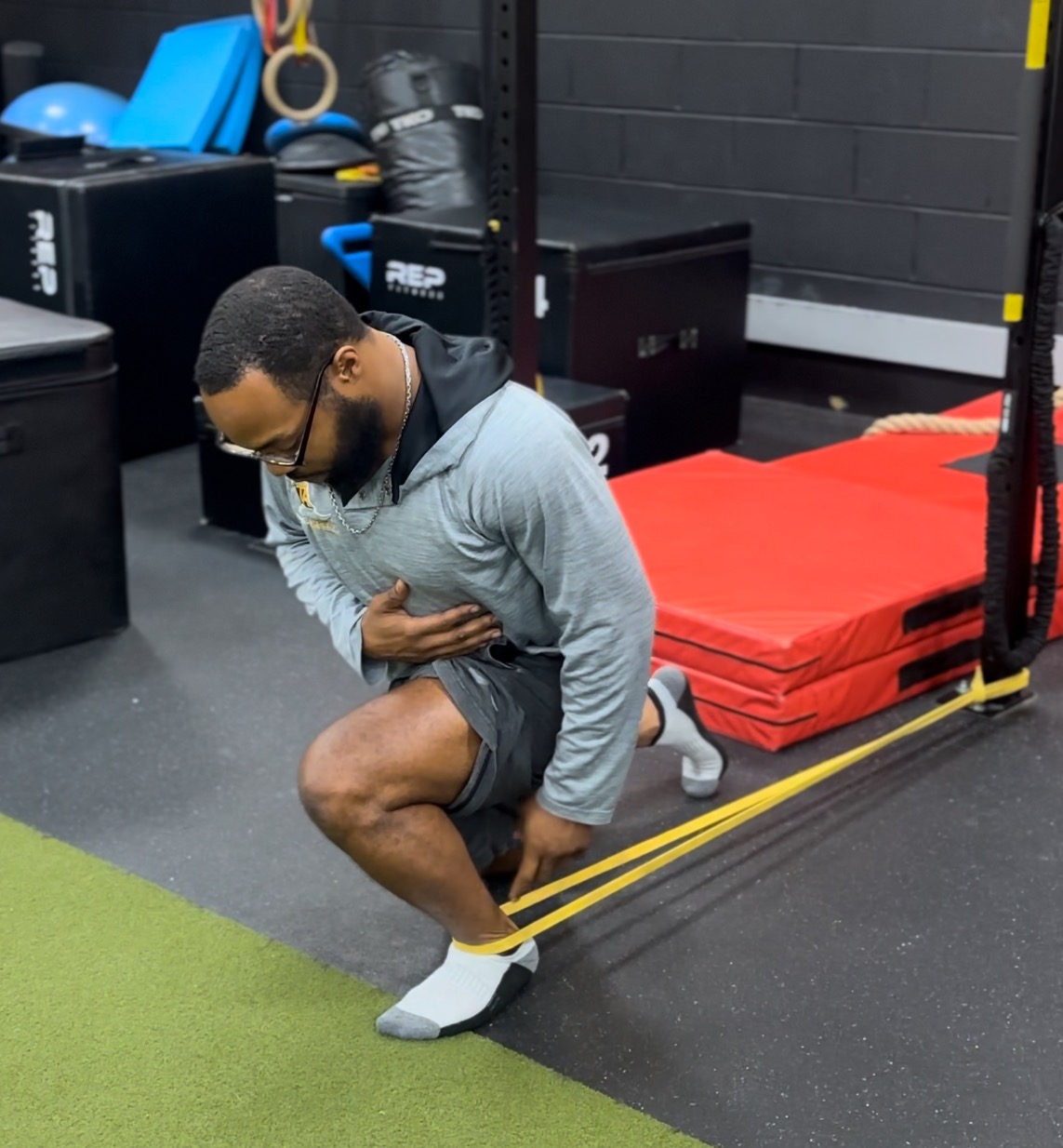
If you’re an athlete, you’re likely performing explosive movements and may experience knee or hip pain without knowing the cause. A common culprit? Lack of ankle mobility. When the ankle has limited range of motion (ROM), it forces the body to compensate, often leading to imbalances or overcompensation in other areas. Another factor that may limit ankle movement is overdeveloped calf muscles, which may need to be stretched or foam-rolled to improve flexibility. The most common movements at the ankle joint are dorsiflexion and plantar flexion. Dorsiflexion refers to lifting the toes or standing on the heels, while plantar flexion is typically seen in calf raises. In addition, inversion and eversion of the ankle allow for rotational movements. A lack of ankle flexibility can hinder athletes from fully pushing or extending, reducing power and explosiveness and ultimately impacting performance. As we age, there’s a greater risk of injury from falls due to decreased dorsiflexion in the ankle joint. This happens because we stop performing movements that promote full ankle mobility and tend to be less active than in our younger years. With the right balance of flexibility and stability, proper movement can reduce the risk of injury as we age.
Written by:
Darrid Watson, CSCS, NSCA-CPT
Take action… Now!
Visit us: Inside of the Flyers Training Center 601 Laurel Oak Rd. Voorhees, NJ 08043