The 5 Biggest Kettlebell Swing Mistakes (And How to Fix Them)
The kettlebell swing is one of the most powerful exercises you can add to your training program. It builds explosive hips, strong glutes, athletic conditioning, and core stability, all in one movement.
But only if you do it correctly.
Poor kettlebell swing form doesn’t just reduce results, it can strain your lower back, shoulders, and neck. If you want to master proper kettlebell swing technique, start by avoiding these five common mistakes.
1. Bending the Elbows During the Swing
One of the biggest kettlebell swing mistakes is turning it into a front raise.
The kettlebell swing is not an arm exercise. If you’re bending your elbows or actively lifting the bell with your shoulders, you’re stealing power from the hips where the movement should come from.
Proper Form Fix:
-
Keep your arms straight and relaxed
-
Think of your arms as ropes
-
Let the bell float to chest height from hip power
If your shoulders are burning more than your glutes and hamstrings, your form needs adjustment.
2. Arching the Lower Back at the Top
Many people lean back and overextend at the top of the kettlebell swing. This places unnecessary stress on the lower back and usually means the glutes aren’t fully engaged.
A proper Russian kettlebell swing finishes in a tall, neutral position, not a dramatic backward lean.
Proper Form Fix:
-
Snap the hips forward
-
Squeeze the glutes hard at the top
-
Finish tall with ribs down and core braced
At the top of the swing, your body should look like a standing plank.
3. Shifting Weight Onto the Toes
If your weight shifts forward onto your toes, you lose power and stability. The kettlebell swing starts from the ground up.
When your weight drifts forward:
-
You lose hamstring tension
-
You reduce hip drive
-
You increase stress on the knees
Proper Form Fix:
-
Keep weight centered over the mid-foot
-
Keep heels grounded
-
Engage your toes by gripping the floor
Stable feet create powerful hips.
4. Squatting Instead of Hinging
A kettlebell swing is a hinge movement, not a squat.
When you squat the bell up and down, you eliminate the stretch-reflex and explosive hip snap that makes the Russian kettlebell swing so effective.
Proper Form Fix:
-
Push your hips back (not down)
-
Feel tension in the hamstrings
-
Explosively snap the hips forward
The hip snap propels the bell. You don’t lift the kettlebell… you drive it.
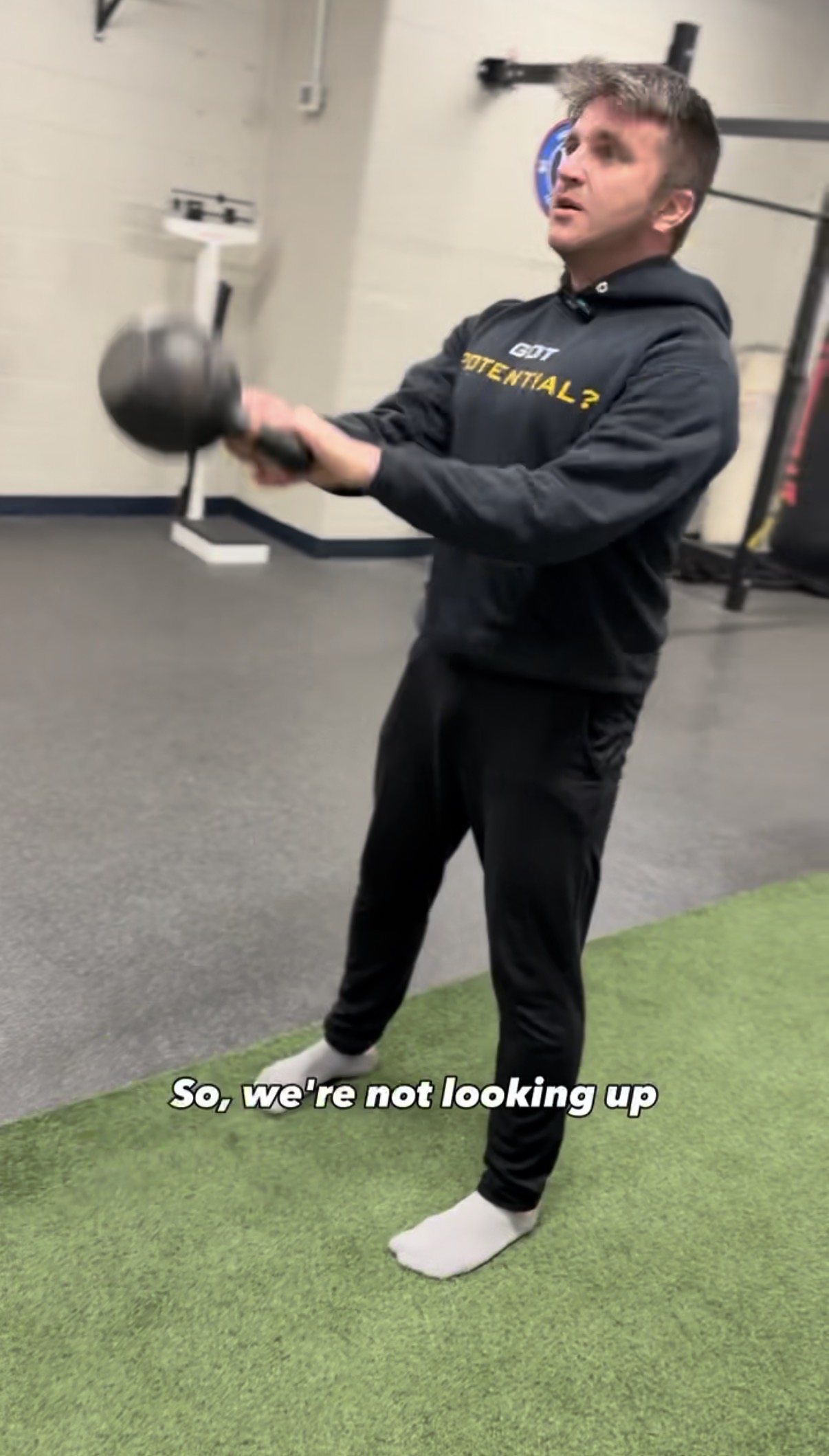
5. Looking Straight Ahead and Cranking the Neck
Many people stare into the mirror during kettlebell swings, lifting the chin and overextending the neck. This disrupts spinal alignment and can create tension in the upper back and shoulders.
Proper Form Fix:
-
Keep the neck neutral
-
Let the chin move naturally with the swing
-
Maintain alignment from head to hips
Your spine should stay long and neutral throughout the movement.
How to Do a Kettlebell Swing Correctly
A powerful kettlebell swing comes down to three fundamentals:
-
Hinge, don’t squat
-
Snap the hips, don’t lift with the arms
-
Stay tall and neutral at the top
Master these, and you’ll build stronger glutes, a more resilient lower back, and better athletic power.
If you’re unsure about your form, film your swings from the side. Check for a strong hinge, neutral spine, and a powerful hip snap.
Clean up these five mistakes, and your kettlebell swing will instantly improve.
Check out the video on our instagram page -TrainingAspectsperformance.
or follow the link:
The 5 don’ts of Kettlebell swings for the YouTube video.
Written by:
Kirill Vaks
BA, CSCS
Take action… Now!
Voorhees Flyers Training center.
The Hollydell ice arena, in the main building.